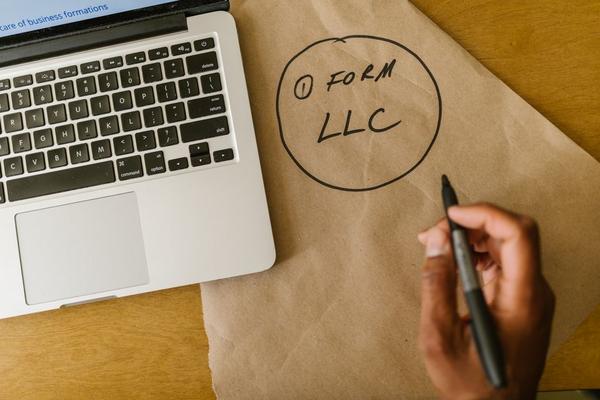
Choosing between an LLC and an S-corporation can feel like a high-stakes decision, especially when tax savings are part of the conversation. The first thing to understand is that these terms do not describe two completely separate choices. An LLC is a legal entity created under state law, while an S-corporation is primarily a federal tax election. In many cases, a small business can form an LLC and later choose S-corporation taxation.
The best answer depends on more than profit. Ownership, state rules, payroll responsibilities, administrative costs, and growth plans all matter. A useful business entity comparison should therefore examine liability, taxes, paperwork, flexibility, and timing rather than assuming one option is automatically better.
What Is an LLC?
A limited liability company is formed under state law, usually by filing articles of organization and paying a state fee. LLC liability protection generally separates the owners’ personal assets from the company’s debts and legal obligations. That protection is not absolute. Personal guarantees, fraud, mixing personal and business funds, or failing to respect the entity’s separate identity can still create personal exposure.
LLCs are popular for small business formation because they are flexible. A single-member LLC is generally treated as a disregarded entity for federal income tax purposes unless it elects corporate treatment. Its activity usually appears on the owner’s personal return. A domestic LLC with two or more members is generally taxed as a partnership unless it elects corporate taxation.
What Is an S-Corporation?
An S-corporation is not necessarily a different state-law entity. It is a tax status available to qualifying corporations and eligible LLCs. A business makes the S-corp tax election by filing Form 2553 with the IRS and meeting federal eligibility rules, including restrictions on the number and type of shareholders and classes of stock.
An S-corporation generally does not pay regular federal corporate income tax at the entity level. Instead, income, deductions, and other tax items usually pass through to shareholders, who report them on individual returns. State treatment varies, and some states impose separate taxes, fees, or filing requirements.
LLC vs S-Corp for Small Business Taxes
How a Default LLC Owner Is Taxed
For a single-member LLC using the default rules, net business earnings generally flow to the owner’s personal return. An individual owner actively operating the business is generally subject to self-employment tax on net earnings, in addition to income tax. Multi-member LLCs taxed as partnerships generally file a partnership return and issue Schedule K-1 forms.
How S-Corporation Taxation Works
An owner who works for an S-corporation is generally a shareholder-employee. The company must pay that person reasonable compensation through payroll before making non-wage distributions. Salary is subject to applicable payroll taxes, while qualifying distributions generally are not subject to self-employment tax. That difference creates the potential savings.
Those savings are not automatic. Payroll, bookkeeping, tax preparation, state fees, and added compliance can reduce or eliminate the benefit. The IRS may reclassify distributions as wages when compensation is unreasonably low. Salary should reflect duties, experience, time, responsibilities, and comparable market pay, not simply the smallest figure an owner prefers.
Liability Protection: Is One Stronger?
For many founders, the legal protection comes from the underlying entity rather than the tax election. An LLC taxed as an S-corporation generally remains an LLC under state law. Electing S-corporation taxation does not create an extra layer of liability protection by itself.
Both LLCs and corporations can protect owners from many business liabilities when properly formed and maintained. The practical strength of that protection depends on state law, contracts, insurance, recordkeeping, and separation of personal and business finances. Professional licensing rules may also affect the available structure.
Paperwork and Ongoing Administration
A default-taxed LLC is often easier to operate. Requirements vary by state, but LLCs commonly have fewer internal formalities than corporations. Owners still need an operating agreement, clean records, state reports, separate banking, and timely tax filings.
S-corporation taxation adds another administrative layer. The business typically needs payroll, employment tax deposits, wage reporting, a separate Form 1120-S return, and Schedule K-1 forms for shareholders. It must also track distributions, shareholder basis, loans, benefits, and compensation carefully. Form 2553 generally must be filed no later than two months and 15 days after the start of the tax year for which the election will take effect, although late-election relief may be available.
Which Option Fits Your Business?
A default-taxed LLC may suit a new business with modest or unpredictable profit, an owner who values simplicity, or a company that is not ready to run payroll. It can also work well for founders seeking flexible ownership and management arrangements.
An LLC with an S-corp tax election may make sense when the business produces consistent profit beyond a defensible owner salary and projected payroll-tax savings comfortably exceed the extra costs. It is often more attractive to established owner-operated businesses than to early ventures with irregular cash flow.
S-corporation status may be unsuitable when ownership fails the eligibility rules, the business needs multiple economic classes, profits are too low to justify payroll, or investors require a different structure. Businesses planning institutional venture capital commonly consider a C-corporation instead.
How to Make the Decision
Start with projected annual profit, not revenue. Estimate a reasonable salary for the owner’s work, then compare potential tax savings with payroll, accounting, tax preparation, state charges, and compliance costs. Consider whether more owners may join, how profits will be distributed, and whether outside investment is expected.
You can also separate the formation decision from the tax decision. A founder may form an LLC, use default taxation initially, and make an S-corp tax election later when the numbers support it. Because state rules and personal tax circumstances vary, have a qualified tax professional and business attorney review the choice before filing.
Frequently Asked Questions
Is an S-corp better than an LLC?
Not universally. An LLC may offer simpler administration and flexible ownership, while S-corporation taxation may reduce employment taxes for some profitable owner-operated businesses. The better option depends on profit, salary, state costs, ownership, and compliance capacity.
Can an LLC be taxed as an S-corporation?
Yes. An eligible LLC can elect S-corporation status while remaining an LLC under state law. The election changes federal tax treatment, not necessarily the company’s legal form.
When does an S-corp election start saving money?
There is no universal profit threshold. Savings become more likely when profit remains after paying a reasonable salary and the tax difference exceeds payroll, accounting, filing, and state-level costs.
Do I need payroll with an S-corporation?
Generally, an owner who performs services for the S-corporation must receive reasonable wages through payroll before taking non-wage distributions. Proper withholding, deposits, and wage reporting are essential.
Conclusion
In the LLC vs S-corp for small business debate, the practical choice is often not one entity instead of the other. It may be an LLC for state-law flexibility and liability protection, combined with an S-corporation election when stable profit makes the added administration worthwhile. Compare the full cost, protect the business’s legal separation, and base the election on realistic numbers rather than a generic tax-saving promise.