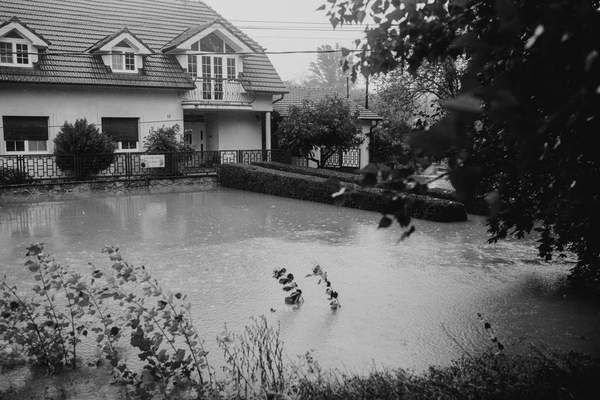
Some homeowners discover their biggest insurance gap only after floodwater has crossed the doorstep. They have paid premiums for years, their house is damaged, and they expect their insurer to help. Then the claim turns on a distinction that is easy to miss: where the water came from.
Flood insurance vs homeowners policy is not a choice between two versions of the same protection. Standard homeowners insurance can cover certain sudden water incidents inside a house, but it generally excludes flooding across normally dry land. Protection against that loss usually requires a separate flood policy.
Homeowners Insurance and Flood Insurance Cover Different Events
What a homeowners policy may pay for
A typical homeowners policy may cover sudden damage from a burst interior pipe, an overflowing appliance, or rain entering through a roof damaged by a covered windstorm. Whether repairs and belongings are covered depends on policy language, maintenance exclusions, deductibles, and the cause of loss.
Some problems need optional endorsements. Sewer or drain backup, for example, often requires additional coverage. Gradual leaks and damage from neglected repairs may be excluded. A homeowners policy is not an all-purpose water-damage guarantee.
What counts as flooding
Flood insurance generally addresses water that rises or moves over normally dry ground, such as river overflow, storm surge, or heavy rain accumulating around multiple properties. Under the National Flood Insurance Program, a covered flood must satisfy a specific definition, including the extent of inundation.
This is why the flood exclusion homeowners encounter concerns the cause, not simply the amount of water. Rain pouring through a storm-damaged roof and surface water flowing through the front door can produce different insurance outcomes during the same storm.
One Storm, Two Very Different Claims
Imagine a thunderstorm damages a home’s roof while runoff overwhelms street drains. Rain leaks through the roof into an upstairs bedroom. Meanwhile, water from the street enters the ground floor and ruins drywall, flooring, and furniture.
The roof-related damage might qualify under the homeowners policy if wind is a covered cause. The ground-level inundation would ordinarily fall under its flood exclusion. A separate flood policy could address eligible flood damage, subject to its terms. Neither policy automatically pays for everything the storm destroys.
After a loss, photograph entry points, waterlines, rooms, and damaged belongings before cleanup whenever safe. Preserve repair estimates and request written explanations of coverage decisions. Review a guide to understanding homeowners insurance exclusions before assuming all water damage is handled alike.
What NFIP Flood Insurance Actually Covers
NFIP flood insurance, administered through FEMA’s National Flood Insurance Program, offers building coverage and contents coverage for eligible properties in participating communities. It protects against direct physical loss from a qualifying flood, rather than every expense caused by the disaster.
Building and belongings have separate limits
For most residential policies, NFIP building coverage is available up to $250,000 and contents coverage up to $100,000. Building protection may include foundations, electrical systems, plumbing, furnaces, water heaters, and certain installed appliances. Contents coverage can apply to eligible furniture, clothing, and electronics.
Buying building coverage does not automatically insure your belongings. These coverages are selected separately and generally have separate deductibles. NFIP contents claims use actual cash value, accounting for depreciation; eligible building claims can qualify for replacement-cost treatment when specified conditions are met.
The limitations that surprise homeowners
NFIP policies restrict basement coverage. Essential equipment, such as furnaces and electrical systems, may qualify, but finished basement improvements and most belongings stored there generally do not. Additional living expenses, including hotel bills while the property is repaired, are not covered.
Landscaping, fences, decks, and most vehicles are also outside NFIP coverage. An auto policy with comprehensive coverage may protect a flood-damaged vehicle. Check the precise exclusions rather than assuming everything submerged is reimbursable.
NFIP or Private Flood Coverage: Which Fits?
Private flood coverage may suit homeowners whose rebuilding costs exceed federal program limits. Depending on the insurer, private plans can offer higher limits, broader coverage for belongings, or temporary living expense protection. These features are not guaranteed, so compare actual contracts.
Look beyond the premium. Compare definitions of flooding, building and contents limits, deductibles, basement restrictions, exclusions, claim procedures, and waiting periods. Confirm that any private policy satisfies your mortgage lender’s requirements and ask how renewal or nonrenewal works.
The better choice depends on your property’s exposure, replacement cost, lender rules, and available policies. A licensed agent can explain NFIP and private flood coverage options in your state.
Flood Zones Affect Requirements, Not Just Risk
Flood zone insurance is associated with waterfront properties, but damaging flooding happens outside mapped high-risk areas, too. Heavy rainfall, inadequate drainage, and nearby development can cause unexpected surface-water flooding. A flood map estimates risk; it is not a promise that your home will stay dry.
Homes in Special Flood Hazard Areas with certain federally backed mortgages generally must carry qualifying flood insurance. Lenders may also require it in other locations. Even when optional, coverage deserves consideration if significant repairs would strain your finances.
Check FEMA’s flood map, ask about previous losses, and assess drainage conditions. A home flood-risk assessment checklist can help organize questions before buying or renewing a policy.
Close the Coverage Gap Before a Storm
Read the homeowners policy’s water exclusions and confirm whether sewer backup or sump overflow endorsements are included. Neither endorsement replaces broad flood protection. Obtain building and contents flood quotes, selecting amounts that reflect your likely losses and available policy limits.
Timing matters. New NFIP policies usually have a 30-day waiting period, although exceptions include certain mortgage transactions. Private insurers have their own effective-date rules. Buying a policy when a storm warning arrives may be too late for the approaching event.
Keep policy copies, photographs, and an inventory of belongings. Review the separate deductibles you might owe after a storm with multiple causes. An insurance coverage gap checklist can make this an annual review instead of a post-disaster surprise.
Frequently Asked Questions
Does homeowners insurance cover rainwater flooding a house?
Usually not when rainwater collects on the ground and flows inside as a flood. Rain entering through roof damage caused by a covered peril may be treated differently. The cause and policy wording matter.
Is flood insurance required outside a high-risk zone?
Not always. Certain mortgages and flood-risk locations trigger federal requirements, and lenders can impose others. Even when coverage is optional, lower mapped risk does not eliminate flood exposure.
Will flood insurance replace everything in a basement?
No. Standard NFIP policies restrict protection for finished basements and belongings. Certain essential equipment may qualify. Review private policy terms separately, since exclusions and limits differ.
Can I buy flood insurance right before a hurricane?
You can apply, but the coverage may not start in time. NFIP insurance generally has a 30-day waiting period, subject to specific exceptions. Private policies may have waiting periods or binding restrictions.
Bottom Line
Homeowners and flood policies solve different problems. The costly mistake is treating one as a substitute for the other. Review exclusions, compare NFIP and private options, and protect both the structure and belongings you need to keep. The worst coverage gap is the one discovered after the water recedes.